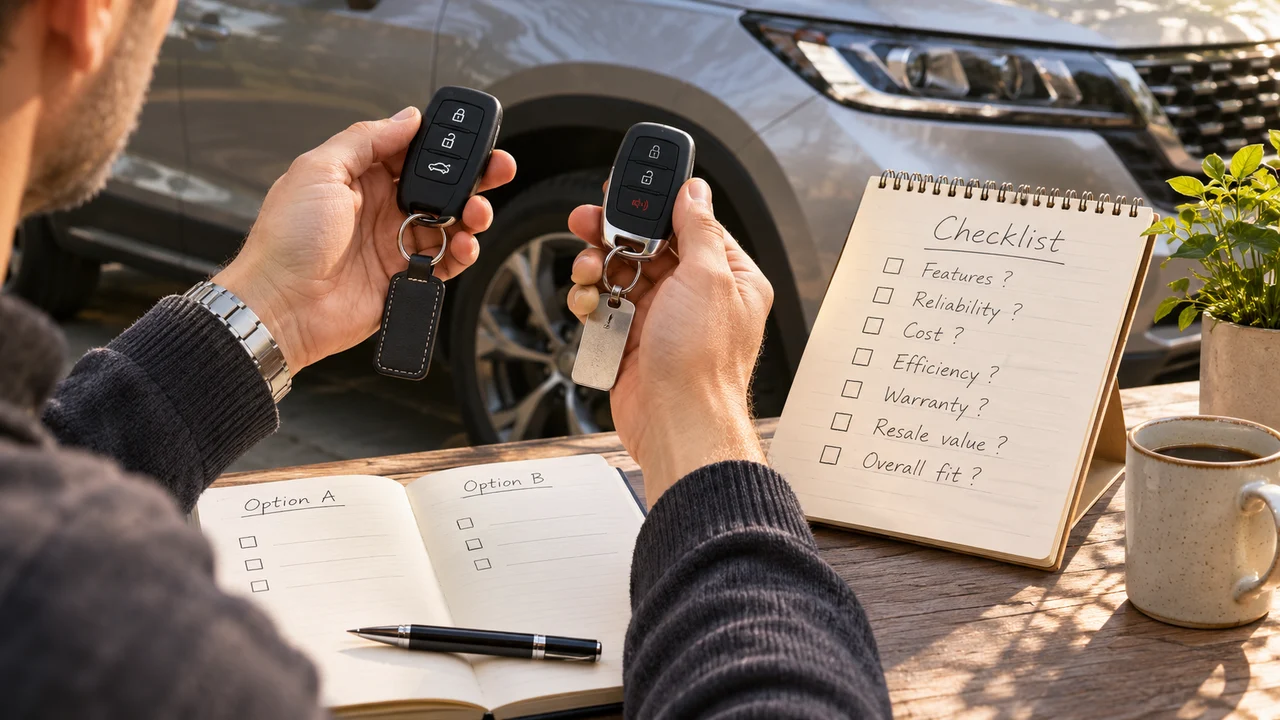
Start with the least flexible part
A useful first question is “What would make this vehicle unsuitable?” The answer can be surprisingly small. A hard instrument case may be too wide for a trunk opening. A relative may need room to open the passenger door fully. A return time may have to work around the last person who can give you a lift. Write down the detail first, before the model name starts to shape the rest of the conversation.
Separate the essential things from the pleasant ones. A car you particularly like can still be your first choice, but a second choice is only helpful if it meets the same essential requirement. If you care about the driving experience itself, say that. A sedan that fits all your bags may not serve the same purpose as the sports car you want for a particular day.
Ask about the offered car
Use the catalogue to make a shortlist. Then ask which vehicle is actually available for the dates you need. Name the feature that matters instead of assuming it comes with a particular model. Two vehicles with similar names can have different equipment. And a feature shown in a model illustration is a reason to ask a question, rather than a guarantee about the unit offered.
For luggage, describe an object as well as its dimensions. The answer to whether a folded stroller fits can depend on whether the rear seats are occupied, how wide the opening is and whether you can safely lift it over the sill. Tell the team how many people and bags will travel at the same time. If a passenger needs a lower step, ask about the entry height and the room needed to open the door.
Put both handoffs on paper
Collection and return are two different appointments. Ask for a time, an agreed address and any instructions for each. Write down how your passengers and their belongings will reach the car at the start, and how everyone will leave after the return. A landmark mentioned in a town guide is useful for orientation. It is not an agreed handoff location.
If you are relying on someone else for a lift, check their schedule too. Having the vehicle available in the afternoon may not help if your only ride leaves that morning. Ask what to do if a train, flight or appointment changes the timing. Clear arrangements before the trip are easier to follow than assumptions made while you are already on the road.
Compare full quotes for the same trip
Ask what the quoted amount covers for the actual start and end times. Discuss mileage, additional drivers, fuel or charging, insurance questions and conditions for changes. If a deposit is involved, ask how it is handled so you can distinguish the cost of the trip from the amount you need available at the start.
Use the same dates and intended use when comparing alternatives. A shorter period or a different return point can change the question. For rideshare or delivery work, check permitted use and platform conditions before estimating a working week. A vehicle that looks economical on paper is only a real option if the proposed use is allowed.
Take a short list into the conversation
Keep the vehicle names, the fixed dates and the question you most need answered together. Ask who may drive, which documents are needed and what arrangements apply at each handoff. Leave space to record the answers in your own words. If anything remains uncertain, write the question beside it, so a tentative possibility does not quietly become part of a confirmed plan.
A short inquiry can do this well. For example, describe a three-person weekend visit, the largest case and the time of a fixed return appointment. Add the vehicle you prefer and one alternative. That gives the team specific things to check and makes their answers easier to compare later.